Surah Al-Fatihah
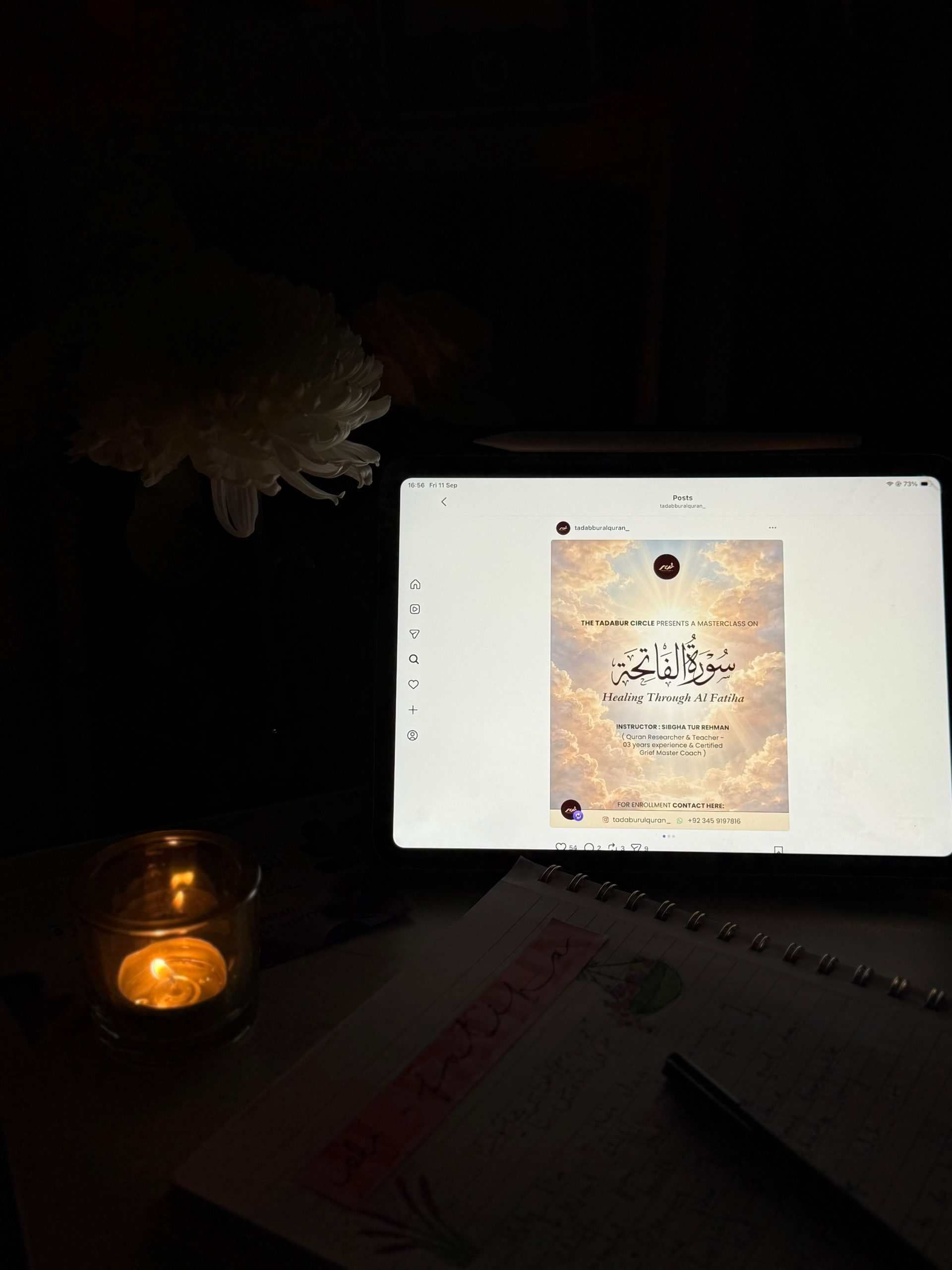
About Course
You recite it every day, often exactly when your mind is loudest. What if you slowed down enough to really hear it?
Surah Al-Fatihah is one of the most familiar parts of our salah. We know its words. We recite them regularly.
The Quran describes itself as a source of healing and mercy for the heart. Al-Fatihah, the surah we return to most, is often the first thing we reach for when anxiety won’t settle, a thought won’t let go, or the body is holding stress that’s hard to name.
But Tadabbur invites us to pause and ask: What am I actually saying? What am I being reminded of? And what could change if I carried these words into my everyday life?
This free experience is designed to help you explore Surah Al-Fatihah through guided reflection and practical exercises, including reflection techniques drawn from psychology that help you sit with anxious or repetitive thoughts instead of getting stuck in them, and gently notice where stress has settled in your body while you sit with words you already know by heart.
In this course, you’ll:
- Explore the meaning of each verse
- Learn how to approach Tadabbur
- Reflect on the relationship between the verses and your own life
- Work through guided reflection exercises, including ones that help you sit with anxious or repetitive thoughts as they come up
- Begin developing a more intentional relationship with the words you recite
This course is for you if:
- You want to understand Surah Al-Fatihah beyond simply reciting it
- You are beginning your Tadabbur journey
- You want a practical and accessible introduction to our approach
- You want a moment of real ease in a season that feels anxious or heavy, not just more information
- You want to slow down and reflect on something you already know
Course format
Duration: Self paced
Format: Recorded lectures + guided reflection exercises
Language: Urdu + easy English
Fee: Free
What makes this different: This is the only place online combining Tadabbur of Surah Al-Fatihah with guided, psychology-informed reflection built specifically around it; not a translation class with commentary added on.
Student Ratings & Reviews